Furniture
How to Restore Antique Furniture After Moving
We move these pieces for a living, so we see what breaks in transit and what it costs to undo. What to check the day the truck leaves, what you can safely fix yourself, and the repairs that quietly erase an antique's value.

A dresser comes off the truck and the veneer has lifted along the top edge. Or the drop-leaf table racks when you set it down. Or there is a white cloud in the finish where plastic sat against it. The instinct is to reach for a cloth and a bottle of something, and it is almost always wrong, because the first thing you do decides what you are still allowed to do next.
Search for help and you land on two sets of pages that contradict each other. Restoration guides say start cleaning, waxing and regluing. Moving-claims pages say touch nothing until the claim is settled. Follow the first and you have forfeited the second. Nobody resolves that, because a restoration shop wants the piece and a claims department wants the file shut.
We move furniture. We do not restore it, and this is not an advertisement for a service we do not sell. What we have is the view from delivery day: the same short list of failures, most of them caused in the hours a piece spent on a truck, not the century it spent in one room.
The first hour, before the crew drives away
The last twenty minutes with a crew on site are worth more than the next two weeks of effort. Look at every antique in raking light: a low angle reveals a dent, a print in the wax or a lifted veneer edge that overhead light hides.
Then look in a fixed order, because the order separates damage that is getting worse from damage that is merely annoying. Photograph before you touch anything: a wide frame establishing which piece it is, the damage with something for scale, then the paperwork with the exception written on it. It is the discipline you would apply to anything else you cannot replace.
- Active moisture, today: anything damp, anything still in plastic, anything that sat on cold concrete overnight.
- Structure under load, today: a frame that moves against itself, a cracked leg, a shelf carrying weight it cannot hold.
- Cracked stone or glass, today: a crack propagates under its own weight and under vibration.
- Lifted or bubbled veneer, this week: an unglued edge catches on a sleeve and tears further each time.
- Loose joints carrying nothing, this month: annoying, stable, better repaired once the piece has settled.
- Finish marks, whenever you like: rings, haze and light scratches do not spread.
- Write the exceptions on the condition sheet before you sign. Signing clean asserts everything arrived as it left.
Do not repair what you might claim
This is the part restoration pages leave out and claims pages state without explaining. If a piece was damaged in transit and you intend to raise it with the carrier, do not clean it, glue it, wax it, sand it or take it to a shop first. A repaired item is one whose original damage can no longer be assessed, and most carriers treat that as a reduced settlement or none at all. The same goes for throwing out the packing materials.
Read your delivery paperwork the day the shipment lands, not the week you notice a problem. For household goods the written claim window is long, nine months from delivery under the California tariff and a federal floor of the same, and the clock starts at delivery rather than at discovery. The trap is not the deadline, it is proof: undocumented damage is hard to argue months later. That is short for a household living out of boxes, which is why the walkthrough above matters.
Then the coverage arithmetic, which almost nobody explains to the owner of an antique before it matters. Basic coverage under DOT rules is released value at $0.60 per pound, included free on every move, ours included. It is weight-based and takes no interest in what a thing is worth: a 120 pound chest of drawers is covered for $72 whether it came from a clearance sale or an auction. That is why Full Value Protection exists and is available on request. Name your high-value pieces in writing before the move: a five-minute conversation on a free quote call that cannot be had retroactively.
Why four hours undo a settled century
Wood never stops behaving like wood. It absorbs and releases moisture with the air around it, swelling and shrinking across the grain while staying essentially fixed along it, and a piece that has stood in one room for fifty years has reached equilibrium with that room. A truck has not. It is an unconditioned metal box that runs well above the outside air. Hide glue, the adhesive under almost everything built before the middle of the last century, softens with heat and moisture. That reversibility is why it was used and why the piece is still repairable. It is also why a joint that has held since the 1920s arrives with movement in it, without anyone dropping anything. Veneer goes first, a thin leaf glued across a substrate that moves at a different rate.
Which raises the question no page on this subject answers: how long should a piece sit before you work on it? Long enough to reach equilibrium where it now lives, which means a week at minimum and two for a large case piece, before you glue anything that fixes a dimension. Repair a joint while the timber is swollen and it will be wrong once it settles. Expect some of what alarmed you on day one to be gone by day ten.
Stable relative humidity
45 to 55 percent is the set point, 40 to 60 percent across a managed year; sustained swings do more damage than the number
Acclimation before any repair
One week minimum in the room the piece will live in, two for a large case piece
Hide glue
Releases with warm water and gentle heat, and fresh glue bonds to old residue
A clamped joint
Overnight before it carries load, whatever the bottle claims
Blankets against the wood, plastic on the outside.
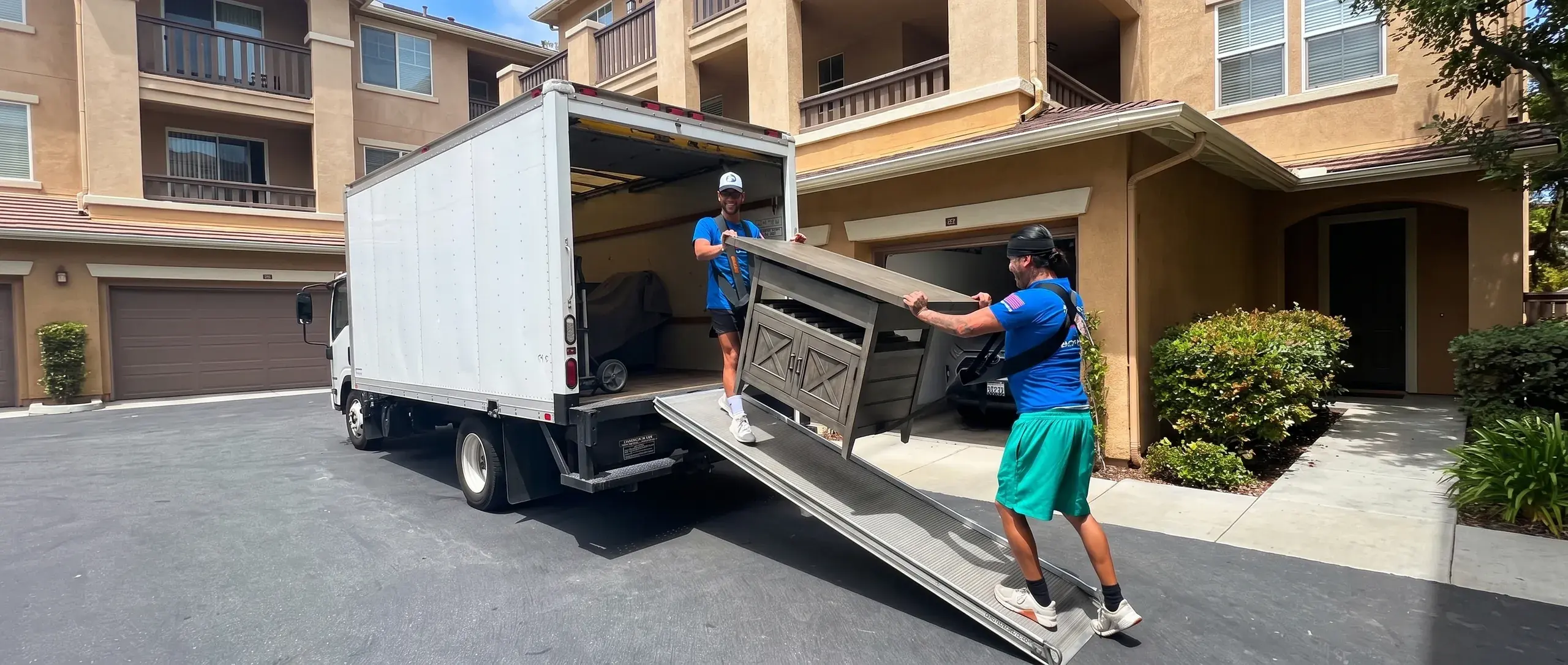
Our crews pad-wrap antiques on site, load them last and unload them first. No material fees, no stair fees, and the price is guaranteed before we book.

What you can safely fix yourself
Identify the finish first. It is the two-minute step almost everybody skips, and everything downstream depends on it. Put a drop of denatured alcohol on a swab and touch it somewhere hidden, inside a leg or behind an apron. Tacky within seconds means shellac, which is what you will find on most pre-1920s furniture. If alcohol does nothing but lacquer thinner softens it, lacquer. If neither touches it, varnish or something modern. Shellac is forgiving and fragile at once: water marks it, heat marks it, household cleaners strip it. Then clean, because much of what looks like damage is wax and grime.
A white ring is moisture trapped inside the finish film, not a stain in the wood, and it is among the most reversible things that can happen to a surface. Dark or black means the moisture reached the wood, a harder problem and not a first repair. For white, work down this ladder and stop when it improves.
- Leave it a week. Some rings clear on their own as the piece dries out.
- A pad barely damp with denatured alcohol, worked lightly with the grain, is the standard first move on a shellac blush. Nothing wetter, and nothing oily: oil sits on top of a finish it cannot penetrate and leaves you a sticky surface instead of a ring.
- A dry cotton cloth with a warm iron on top, steam switched off, low heat, two or three seconds at a time. Never over a seam, an inlay, or a veneered top: the heat that lifts the blush also softens the hide glue underneath, and veneer goes first.
- For dullness: clean, then one thin coat of paste wax, hazed and buffed. Wax protects, it does not repair.
- For a scratch in the finish, wax often hides it. Into the wood, color before filler, and go lighter than feels right.
- For a joint carrying no load: warm hide glue, a caul, wax paper against the finish, clamped overnight. If you will not use hide glue, live with the wobble.
- For a short lifted veneer edge, the same, worked underneath with a thin blade.
Denatured alcohol
For the finish test only, a drop on a swab somewhere hidden. It dissolves shellac, which is exactly why the test works, so it never goes across a surface
Mineral spirits
Dissolves wax, grime and old polish without dissolving shellac; the correct first step
Hide glue
The only adhesive that belongs in a period joint, because the next repair depends on it
Cotton cloths and a caul
No abrasives, no scouring pads, no aerosol sprays, no sander of any description
What quietly erases the value
Stripping an original finish is the most expensive thing a well-meaning owner does, and it does not look expensive while it is happening. Patina is not dirt. It is oxidation, wear and finish history accumulated over a period nobody can recreate, and on a piece with provenance it is much of what a buyer is paying for. Refinishing a documented antique can remove most of its market value in a weekend, close to consensus in the trade. So appraise before you refinish: it is the only decision here that cannot be walked back. There is no tidy percentage here, whatever the generic pages imply. What the trade does agree on is the direction: stripping and refinishing an original surface commonly takes thirty to fifty percent off the value, and more on a piece whose finish is part of its history. Sanding is the fast version: period veneer runs around a sixteenth of an inch, modern veneer is nearer half a millimetre, and a sander goes through either in seconds.
Then the adhesive question, which the generic pages get wrong constantly. Modern PVA wood glue, including the waterproof grades those pages recommend for loose antique joints, cures into a film that does not bond to itself and penetrates the fibers on the way in. It cannot be cleanly released. Hide glue can. On antique joinery the goal is therefore not strength, it is reversibility, and a joint glued with waterproof PVA is one the next restorer has to cut apart. Structural work is the same: a chair that racks is failing at its mortise walls, and the answer is to take the joint apart and reglue it, not to drive screws through it, because every hole is forever. Keep the original brasses in a labeled bag.
The bad advice on page one
Search this topic and you will be told, on pages that rank well, to rub a paste of olive oil and table salt in circles over a water ring, and that it works especially well on antique pieces. It does the opposite. Salt is an abrasive and oil is not a finish, so the combination is a slurry scoured across an aged shellac film, against the grain. What reads as improvement is a uniformly scuffed area catching light differently from the ring it replaced.
Aerosol furniture polishes appear on the same pages as restoration products. Many contain silicone, the contamination professional finishers dread: it migrates into the wood, does not come back out, and causes fisheye craters if the piece is ever refinished. Boiled linseed oil prescribed daily for a week is subtler, because linseed oil has real uses. It is also slow to cure, it darkens with age, and the rags are a genuine fire risk: linseed-soaked cloths generate their own heat as they cure and have started house fires, so they go flat outdoors to dry or into water, never balled in a bin. On shellac or wax it sits on top of a finish it never penetrates, turning a dry surface sticky.
- No abrasives on a finish, and that includes salt, baking soda and scouring pads.
- No silicone sprays or aerosol polish on anything you might want refinished properly.
- No ammonia or glass cleaner near shellac.
- No water-based fabric refreshers on upholstery you cannot open and dry: the odor lives in the stuffing and the moisture stays there.
- No modern wood glue, waterproof or otherwise, in a hide-glue joint.
- No sander on veneer, and no hand sanding without knowing how thick the leaf is.
The cheapest restoration is the one you never book.
Veteran-owned, USDOT #4329208, rated 5.0 on Google. We answer 24/7 including holidays.
Marble, mirrors, and the handoff
Marble is where the most avoidable transit damage happens, and the physics is simple. Stone is strong in compression and weak in tension, so a slab carried flat holds its weight across its span and cracks through the middle. On edge in a padded upright it is supported along the axis it is strong in. Marble tops on period pieces sit loose by design, which is why they travel separately. Old mirrors run counterintuitive in the same way: the mottling at the edges is the silvering degrading with age, the thing that makes the mirror period, and replacing the glass removes it. Frames of that era are gesso over wood, brittle at the corners, so anything framed and glazed follows the logic of packed artwork.
Which brings us to the handoff, where the real money is won or lost. A refinisher removes finish and replaces it, which is skilled work and exactly right for a mid-century sideboard with a ruined top. A conservator stabilizes and preserves original material, works reversibly where possible, and documents what was done. Handing a signed period piece to a shop whose business is stripping is how a valuable object becomes a nice-looking one. Ask these first: vague answers to the first three mean you are talking to a refinisher.
- What exactly will you remove, and is any of it original?
- Is the repair reversible, and with what, by whoever handles it after you?
- What adhesive goes into the joints, and why that one?
- Can you match the surface without stripping the whole piece?
- Will you document the work in writing, before and after?
- Are you insured for the piece in your shop, and should it be appraised first?
- Stop on anything with a maker's mark, marquetry, inlay or gilding, any structural failure on a piece people sit on, and anything you would hate to make worse.
What to remember
- Photograph before you touch anything, write the exceptions on the paperwork before you sign, and read your claim window the day it lands.
- Triage in order: active moisture, then structure under load, then veneer and joints, then finish. Only finish marks fail to get worse on their own.
- Let the piece acclimate where it will live, a week minimum and two for a large case piece, before gluing anything that fixes a dimension.
- Reversible or nothing. Hide glue in a period joint, mineral spirits and paste wax on a finish. Waterproof glue and a sander are one-way doors.
- Stripping an original finish removes most of what a collector is paying for. Appraise before you refinish, and know a refinisher and a conservator are different trades.
Get it priced to the dollar.
No fuel surcharges. No stair fees. No hidden anything. The quote is the price, 24/7 including holidays.
A week at minimum, and closer to two for a large case piece or anything that rode through real heat, standing in the room it will live in. Wood keeps exchanging moisture with the air around it, and a joint glued while the timber is still swollen will be wrong once it settles. Expect some of what alarmed you on day one to improve on its own. The only things that cannot wait are active moisture and anything structural under load.
On a piece with genuine age and provenance, yes, and often dramatically. Patina is oxidation, wear and finish history accumulated over a period nobody can recreate, and it is much of what a buyer is paying for. Ignore the neat percentages the content-mill pages quote. The figure that is actually documented runs the other way: stripping and refinishing an original surface commonly costs thirty to fifty percent of the value. The decision is permanent, so appraise first, then decide. A mid-century sideboard with a ruined top is a different question.
Longer than most people assume. For household goods the written claim window is nine months from delivery under the California tariff, and federal rules set the same floor, with the clock starting at delivery rather than at the moment you notice. Read your delivery paperwork the day it lands anyway, because the limit on a late claim is rarely the deadline and almost always the evidence. Two things weaken a claim badly: signing the condition sheet clean and writing the exceptions later, and cleaning or repairing the piece before it is assessed.
Routinely, and it is worth understanding because it changes what you ask for. Nothing gets dropped. A case piece gets lifted by its top, which is attached through slotted holes rather than built as a structural member, so the carcass racks and shows up as a wobble two weeks later. Plastic film goes straight against a finish and blooms shellac white. Hide glue softens in a hot truck box and vibration does the rest. Ask for blankets against the wood, tape only on the blanket, drawers out and marble on edge.
No. We move furniture, and we pack, wrap, disassemble and reassemble it, but restoration and conservation are separate trades and we will point you to them rather than pretend otherwise. What we can do is make the repair unnecessary. Flexdolly is veteran-owned, holds USDOT #4329208 and carries a 5.0 rating on Google. Basic DOT coverage at $0.60 per pound is included and Full Value Protection is available. We answer 24/7 including holidays: (858) 733-0775.