Packing
How to Pack Jewelry for Moving: Expert Tips for Your Gems
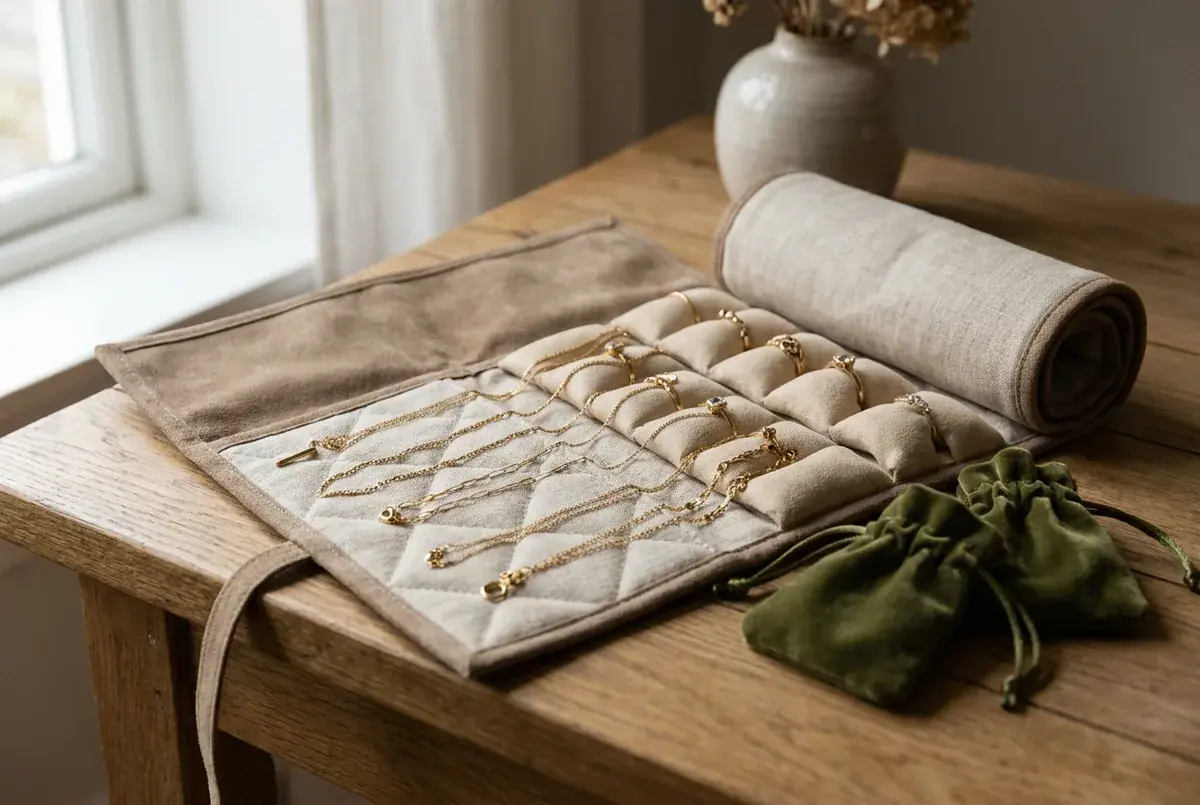
The rings, the chains, the pieces that cannot be replaced: what to photograph first, how to pack each type so it arrives the way it left, and why the jewelry bag never touches the truck.

There is a short list of things that should never be on a moving truck, and jewelry sits at the top of it. Not because a truck is a dangerous place, but because a wedding band is roughly the size of a bottle cap and a moving day sends several hundred objects through one front door in the space of an afternoon.
We have moved more than 10,000 families. Jewelry is the one category we ask customers to keep entirely out of our hands. It is also the category most people prepare for last, usually the night before, usually in a hurry, usually by tipping a drawer into a shoebox and hoping.
Here is the better version. What to inventory before anything gets wrapped, how to pack each type of piece so it arrives untangled and unscratched, where the overflow should go when it should not be in your car, and what a San Diego moving day specifically does to a bag of jewelry left on a back seat.
The rule: jewelry never rides on the truck
Everything else in this guide is a refinement of one rule. Rings, watches, loose stones, the pendant from your grandmother, the coin collection in the sock drawer: those travel with you, in a bag you can put a hand on at any moment during the day. The rest is craft.
The reason is not suspicion. It is arithmetic. Most jewelry that goes missing on moving day was never stolen. It was packed. A ring left in a nightstand dish gets swept into a carton, the carton gets labeled by room, and the ring surfaces three weeks later under a stack of paperbacks, or does not surface at all because that box went to the donation pile. Taking the jewelry out of the house before the crew arrives deletes the entire failure mode.
We are licensed and insured, USDOT #4329208, with $1M liability and $100K cargo coverage, and the advice does not change. Coverage settles a claim. It does not give you back the earrings your mother wore.
So the first decision is physical, not administrative: one bag, hard-sided or at least structured, small enough to keep on your body, and it leaves the old house before the first furniture pad comes off the truck.
Inventory first, in the ten minutes it actually takes
Do this before a single piece gets wrapped, at a table with good light, with the drawer emptied out in front of you. An inventory made after something goes missing is a memory. One made the week before is a record, and a record is what an insurer, a police report or a claims adjuster can actually work with.
Shoot each piece flat against a sheet of white printer paper with a coin in the frame for scale. Then take a second, closer frame of any hallmark: 925 on silver, 585 or 14K on gold, 750 on eighteen karat, PT950 on platinum. Watches get a photo of the case back, where the serial and reference numbers are engraved. Those two numbers are what makes a watch traceable and what an insurer will ask for first.
While the receipts are out, check the dates on any appraisals. A jewelry rider on a homeowners policy is usually written against a specific appraised value, and appraisals go stale as metals prices move. It is also worth one phone call to ask your insurer whether the rider follows the pieces while they are in transit or sitting in storage between closing dates. The answer varies by policy and it is much better known in advance.
- One flat photo per piece against plain white paper, with a coin in frame for scale
- A close frame of every hallmark or metal stamp: 925, 585, 14K, 750, PT950
- Watch case backs, where the serial and reference numbers are engraved
- Any engraving, repair, chip or missing stone, described in one written sentence
- Scanned appraisals and receipts, with the appraisal date noted next to each
- A plain written count: how many rings, how many pairs of earrings, how many loose stones
- The whole file in cloud storage and emailed to yourself, not living only on the phone
The four things that damage jewelry in transit
Jewelry does not fail in one way, it fails in four, and they call for different answers. Abrasion: a diamond will scratch essentially everything else in the box, including other diamonds, given a shared compartment and forty miles of road. Tangling: fine chains knot themselves in minutes, and an untangling session with a sewing needle is a genuinely miserable way to spend a first evening. Tarnish: silver reacts with sulfur in ordinary air. Crushing: hollow beads, filigree and thin gold hoops flatten under the weight of whatever gets set on top of the bag.
One piece per bag is the entire discipline. It looks excessive laid out on the table. It takes about twenty minutes for a full box and it is the difference between unpacking and untangling.
Two things to keep out of the kit. Rubber bands, because rubber is a sulfur source and will tarnish silver quickly, often leaving a visible band-shaped mark. And newspaper, because ink transfers onto pearls and any porous or matte finish, and newsprint is mildly abrasive besides. Use plain unprinted packing paper if you need bulk.
Small zip bags, 2 x 3 in
25 to 40, one piece per bag
Anti-tarnish tabs
One per silver bag, or one per small container
Microfiber or flannel squares, 4 x 4 in
10 to 15, for wrapping and for padding layers
Plastic cocktail straws
One per necklace, cut to just under chain length
Hard-sided carry case, foam-lined
One, roughly 12 x 9 x 5 in, camera-case style
Painter's tape and a fine marker
For labeling bags without leaving residue
Let the crew handle the wrapping.
Blankets, paper and shrink wrap arrive with the truck. Materials are priced in the survey, and the quote you are given is the price.

Packing by type: chains, studs, pearls, and watches
Chains are the classic problem and the straw trick is the only method that reliably survives a real move. Cut a plastic straw to just under the length of the necklace, thread one end of the chain through it, and clasp the necklace closed around the straw. The straw holds the chain straight, and a chain that cannot fold cannot knot. For a heavier chain that will not thread, roll it flat in a microfiber square and tape the roll closed with painter's tape.
Earrings fail differently: the loss is almost never both, it is one. A single earring is worth close to nothing, so the whole job is keeping pairs together. Push both studs of a pair through the same shirt button and screw the backs on. Hooks and drops go through the two holes of a stiff card. Then the pair goes into one bag, together.
Organic and porous materials need their own thinking. Pearls are strung on silk and are soft enough that a diamond sharing a pouch will mark them, so they go in a silk or cotton pouch of their own. Do not seal pearls, opals or amber in an airtight bag with silica gel: opals hold water in their structure and can craze when dried out, amber is a soft resin, and drying the silk thread on a pearl strand is how strands break. Emeralds are commonly oil-treated and dislike heat and solvents. Keep all of it out of hot cars, which is the next section.
Loose stones deserve a mention because they are the easiest thing in the house to lose. Do not put a loose stone in a zip bag, where it can work its way out through the seam corner. Fold it into a paper parcel, the way a jeweler does, with two folds each way and the last flap tucked in, then put the parcel in the bag. Watches go flat in the foam-lined case with the crown pushed in or screwed down, kept away from magnetic bag closures and speakers.
Fine chains
Thread through a cut straw, clasp closed around it
Stud earrings
Push the pair through one shirt button, backs on
Rings
One soft pouch each, or slits cut in a foam strip
Pearls, opals, amber
Silk or cotton pouch, no airtight bag, no silica gel
Sterling silver
Zip bag with the air pressed out, anti-tarnish tab, no rubber bands
Watches
Flat in foam, crown in, away from magnets and speakers
Where the overflow goes: banks, registered mail, and the safe in the closet
Not everything belongs in the car with you, particularly if the move has a gap in it. Closing dates that do not line up, a month in storage, a renovation between houses: those are the situations where a bank safe deposit box earns its fee. Two practical notes. Confirm vault access hours with the branch rather than assuming they match lobby hours, and go mid-week, because a Friday-afternoon move that ends with the vault shut until Monday starts the new house on the wrong foot. Also remember that the bank does not insure the contents and neither does the FDIC. Your own policy or rider does, so tell your insurer where the pieces are sitting.
For a genuinely long-distance move where you are not driving, USPS Registered Mail is the traditional method and it is still the right one. It is the chain-of-custody service: signed for at every transfer, held in secure containers, insurable to a declared value you set at the counter. It is deliberately slow, so it only works if you send it well ahead of the move rather than the day before.
Then there are safes. A bolted floor safe or a tall gun safe is a specialty item, not a two-person lift. Empty it before anyone touches it, photograph the interior before you empty it, move the contents yourself, and do not leave the combination anywhere in the house, including taped under a drawer, which is the first place anyone would look. Tell whoever prepares your estimate about the safe up front. Its weight and how it is anchored change how the day is staffed and how long it takes.
Moving day in San Diego: heat, driveways, and elevator windows
The bag never waits in the car. An inland August afternoon in El Cajon, Santee or Poway turns a closed vehicle into an oven, and even a coastal driveway in direct afternoon sun gets hotter than people expect. Heat is not neutral for jewelry: opals can craze, amber softens, pearl strands dry, and the adhesive holding stones in glued costume settings gives up entirely. Add the ordinary risk of a visible bag on a seat at a beach lot or a trailhead, and the answer is simple. It comes inside with you, or it stays on your back.
Geography changes the shape of the day. On the narrow streets above the Cove, on Mount Soledad and on the older lanes in Bird Rock, a full-size truck often cannot get near the door, so crews shuttle from further down the block. Del Mar estates bring long, steep, curved driveways with the same result. More trips, a propped front door, a longer window where the house stands open. None of that is a problem to solve on moving day if the jewelry left the house the night before.
High-rise moves have their own rhythm. Buildings downtown and across Mission Valley typically require a reserved freight elevator window, often a fixed block of a few hours, with a certificate of insurance filed with the HOA in advance. Book it two weeks out and confirm the day before, because a missed window can push a move to the following day. During that window your unit door is propped and the corridor is shared with neighbors, contractors and deliveries. Wear the bag as a backpack for the duration and stop thinking about it.
Military PCS moves out of Coronado, Miramar or up toward Pendleton follow the same rule with one addition. If you are flying ahead of your household goods, the jewelry goes in the carry-on, never a checked bag, and the inventory photos need to be in your phone and your email rather than on a laptop that is crossing the country in a crate. PCS dates also land on weekends and holidays with some regularity. We run 24/7 including holidays, so that is a schedulable day: (858) 733-0775.
Pick the date, we work around it.
Crews run 24/7 including holidays, so a reserved freight elevator window or an early start ahead of the heat is schedulable.
The last sweep, and the first night in the new place
Before the crew wraps the bedroom furniture, walk the house once with a flashlight. Jewelry migrates. It comes off at the kitchen sink, in the bathroom, in a coat pocket, in a travel pouch that never got unpacked from the last trip. Pull every drawer out fully, run a hand under the liners, and open the compartments in the jewelry box that you never open.
On arrival, resist the obvious move. The instinct on night one is to put everything straight back into the nightstand, and night one is exactly when the new place has installers coming and going, a garage door that has been open since noon, boxes stacked against the windows and no settled habit about where anything lives. Keep the bag closed until there is a locked drawer, a safe, or at minimum a place only you know about.
Then reconcile against the inventory, piece by piece, before the empty boxes leave the house. Same day, while the packing materials are still there to search. A discrepancy noticed in November about a move in July is not a claim. It is a story.
- Under drawer liners, and inside the ring-roll ends of a jewelry box
- The hidden bottom tray on jewelry armoires, which many owners have never opened
- The gap behind and beneath the dresser, where earring backs land
- Coat and jacket pockets, and the small zip pocket inside a handbag
- The kitchen windowsill and the bathroom soap dish, where rings come off at the sink
- A toiletry or travel pouch still packed from the last trip
- A drawer in a completely different room: the desk, the junk drawer, the car console
What to remember
- Jewelry travels with you, in one bag you keep on your body. It leaves the old house before the crew arrives, and it is not opened until there is somewhere locked to put it.
- Photograph and log every piece before anything gets wrapped, hallmarks and watch case backs included. Store the file in the cloud and in your email, not only on your phone.
- Pack by material rather than by drawer. Silver tarnishes, pearls and opals dry out, fine chains knot, and a diamond scratches whatever shares its compartment.
- In San Diego, heat does more quiet damage than anything else. A bag left in a parked car in August is the mistake that costs you an opal or a glued setting.
- Sweep drawer liners, ring rolls and the back of the dresser before the furniture gets wrapped, then reconcile against your inventory the same day you arrive.
Get it priced to the dollar.
No fuel surcharges. Stairs are in the quote. No hidden anything. The quote is the price, 24/7 including holidays.
A crew can move a jewelry armoire. The contents are a separate question, and the standard across the industry is that small high-value items stay with the customer: jewelry, cash, passports, collectibles, prescription medication. We are licensed and insured with $1M liability and $100K cargo coverage, we hold a 5.0 rating on Google, and we would still rather you carried the jewelry yourself. It is not about coverage. It is that a ring in a bag you control cannot end up in a carton labeled Bedroom 3.
For a straightforward same-day local move, usually not, since it adds two trips and two chances to forget. For a move with a gap in it, a storage month, mismatched closing dates, a renovation, it is the right call. Confirm the branch's vault access hours before you plan around them, go mid-week rather than Friday afternoon, and remember the bank does not insure the contents. That falls to your own policy or rider, so tell your insurer.
Hand-carry it. In a government-funded move, high-value items run through a declared-items process, and the safest version is simply not shipping them. If you are flying ahead of your household goods out of Coronado or Miramar, the jewelry goes in your carry-on and never in a checked bag. Keep the inventory photos accessible on your phone and in your email, because your laptop may be in a crate for several weeks.
No, for two separate reasons. Heat is the first: a closed car in San Diego through a summer afternoon gets hot enough to soften the adhesive in glued costume settings, dry out pearl strands and craze opals. Theft is the second: a visible bag on a seat is the most common smash-and-grab target at beach lots and trailheads. Wear it as a backpack and the problem disappears.
Not at all. Local moves typically run $400 to $600 for a small job, $600 to $1,000 for a one or two bedroom, and $1,000 to $1,400 for a larger home. No fuel surcharges, no hidden fees, and the stairs priced in the survey. The quote is the price. Call (858) 733-0775 anywhere in San Diego County, and mention any safe, piano or specialty item when you do.