The neighborhood
How Costa Mesa moves differently
East of Newport Boulevard, the streets between 17th and 22nd are lined with post-war bungalows and single-story ranch homes, many on lots where the garage opens onto a rear alley instead of the street. Those alleys are narrow and shared, so a truck sitting in one blocks every neighbor behind you for the length of the job. We often stage on the street frontage and shuttle instead, which adds a little to the walk and saves an hour of untangling a blocked driveway. The Westside has the same shape at a smaller scale: bungalow lots, older mobile home parks, and a lot of second units and garage conversions added long after the original house.
West of Harbor Boulevard, Mesa Verde has been there since 1958. Curving streets, wide driveways, single-story plans with the bedrooms farthest from the front door, and owners who have often held the same house for decades, which usually means a long carry and a full house of contents. The other Costa Mesa is dense and vertical: the mid-rise apartment communities around South Coast Plaza and the Segerstrom Center, where the day depends on an elevator window and a controlled garage, and the buildings around Orange Coast College and Vanguard University that turn over hard in late August and again in January. We book the elevator and the loading zone before the day, not on it.
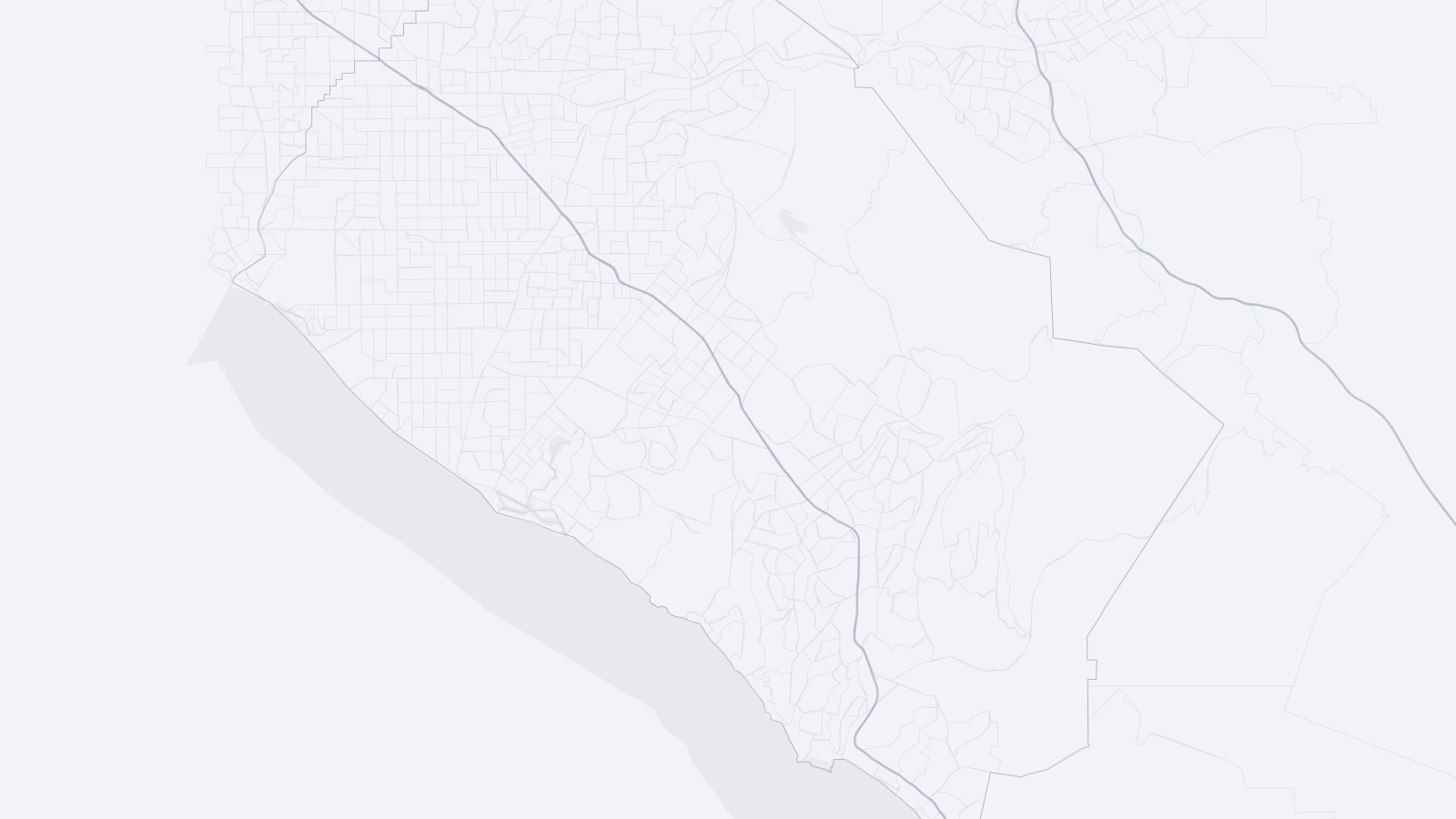
30th StreetUniversity AveRay StreetMorley FieldBalboa Park